

Within the framework of the International Symposium “Ancient Khuttal — the Cradle of the Emergence of the Tajik-Persian Language and the Ancient Civilization of Central Asia,” participants visited Vose District and explored the historical complex of Hulbuk.
The scientific and cultural program of the symposium continued in Vose District, bringing together participants from academic, cultural, and research circles from both within the country and abroad. The visitors had an opportunity to closely acquaint themselves with Hulbuk, one of the most significant monuments of ancient Tajik civilization.
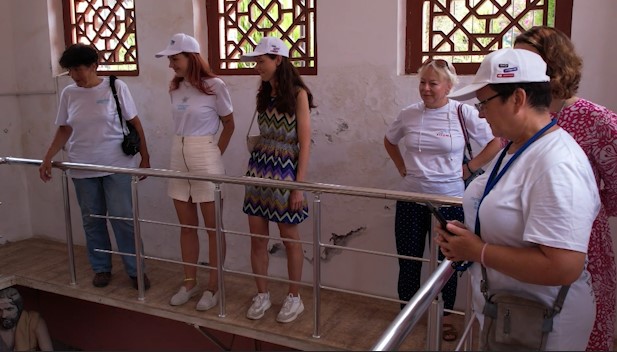
The guests were first officially welcomed at the Hulbuk Fortress, after which they toured the territory of the ancient settlement and archaeological excavation sites. Historical artifacts discovered in the area, including unique cultural and material findings, once again underscored the site’s importance as one of the key political, economic, and cultural centers of the medieval period.
During the visit, particular attention was drawn to monuments reflecting the advanced level of culture, craftsmanship, and statehood of the inhabitants of this land. According to researchers, Hulbuk is not only a valuable historical heritage site but also a reflection of the millennia-old civilization of the Tajik people, and its in-depth study can shed light on important chapters of national history.
As part of the program, symposium participants also visited the museum of the historical complex, where they explored rare exhibits and historical artifacts. The collections on display, representing different stages in the development of ancient Khuttal, were recognized as evidence of the region’s significant role in shaping the culture and statehood of the peoples of Central Asia.
Later in the day, the documentary film “Ancient Khuttal” was screened at the Palace of Culture of Vose District. The film highlights the glorious history of Khuttal, the role of this ancient land in the formation of the Tajik-Persian language and culture, and its contribution to the ancient civilization of Central Asia, based on historical evidence and academic research.
Direct engagement with historical monuments and familiarity with the material and spiritual heritage of ancient Khuttal enabled participants to better appreciate the significance of this unique historical treasure. The preservation, study, and promotion of such heritage serve not only as a means of reviving historical memory but also as an important factor in strengthening national identity and promoting Tajik civilization internationally.